
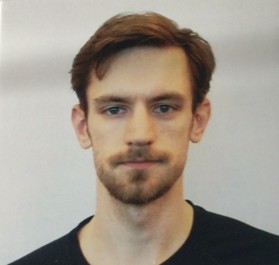
“Heene” is different from other stories that DRP has published in the past, and we were excited to share such a strong voice and unique perspective. Let’s learn more about Dylan and his writing process!
Dylan Orosz is a writer from Texas, focusing primarily on fantasy x science fiction x horror novels and short fiction. As an imaginative lover of the sublime and fantastique, Dylan writes to entertain readers with mystifying phantasy adventure fiction within worlds larger than themselves. His books are character-driven and fast-paced (and he is currently working on publishing them!) Through the storytelling power of myths and archetypes, Dylan wants to bring about transformative alterations in the consciousness of others and himself. Readers can expect stories of divine beasts and dark magicians, supernal villainy and secret agencies, cyber-detectives and AGI archangels. Dylan writes to express visions that will awaken, evolve, and cultivate the world. His website is DylanOrosz.com and as @finalboyo on Twitter/X & BlueSky.
1. At what point did you consider yourself a writer?
After college, in 2017, I started a blog called “Thresholds of Transformation” (.blog) that became a kind of diary of fiction and musings. It was where I learned how to write seriously, at first conceiving my own Twilight Zone plots and later writing essays about my favorite movies and animanga. Throughout school, I always excelled at writing and literary critique. That blog is where it became my primary hobby, an enjoyable mode of my pure, unfiltered imagination. TOT is where I christened myself writer, a continuous engine of ideas at practice.
2. Give us a peek into your writing process.
I try to write every day, though I don’t always achieve it. The goal is to be outlining unconsciously all the time, always gathering new angles and characteristics. I write mostly at night because I feel the unconscious realms are closer. Also the world quiets down.
For short fiction, I am a “planster” — meaning it is partly plotted and much of it improvised. I like to be surprised by shorter fiction. For novels, I am a pretty detailed planner. I outline all the character archetypes and worldbuilding well before building the bridges of the plotline on a chapter-by-chapter basis. For me, the plot of a novel feels way too important to leave much to chance.
3. How do you come up with your ideas? How do you beat writer’s block?
Most of my ideas spawn from my favorite books and anime, from movies and manga, and other art. I desire my stories to be cinematic, visceral, and striking, often filled with intelligent characters and the supernatural feats of sublime transformations. I also work heavily with archetypes, meaning that I honor The Knight, The Mother, The King, The Magician, The Fool, and so on. Fantasy stories are alike in the structure of myth and I think there are practically infinite ideas within the mythic archetypes if you take the time to study them. Every writer is taking them on. I like to make mine bizarre yet beautiful. Most of all, I value creating things I have never seen before and would like to. My way through writer’s block is to conceptualize stories & characters so refreshing to me that I am forced to enjoy the sometimes grueling process of creating them. 😄
4. What do you hope readers will get out of your short story featured in DRP’s Cocoon issue?
“Heene” is a story only conceived in the age of mass livestreaming entertainment. I am a haphazard Twitch viewer and sleight understander of the culture, of both live audience and streamer star. I find the paradigm fascinating and have read much on the nature of parasocial relationships, or the one-sided familiarity that a viewer has with “their” streamer. It is all rather strange, perhaps unhealthy, and yet I understand the transformative nature of attention and loneliness and the yearn for companionship and fame. All this causes people to do all sorts of weird things. Jules Heene is one such person, meant to be understood and appreciated in a parasocial sort of way.
5. What was the inspiration behind your stories featured in DRP’s Cocoon issue?
“Heene” originated from a photograph I saw on Twitter, of a gravestone with a green mossy skull. The name carved into the stone was marred by age but the name “Heene” could be seen. I thought the photo looked pretty metal, so I added it to my outline for an anthology series of short stories I was planning to write. Later, when detailing those stories — I conceived of “Heene” being some sort of lich. An undead necromancer, someone with great power but now resting inside his grave forevermore. Waiting. How might such a being re-awaken? Some of my favorite weird fiction stories are the ones where a guy goes into a tomb…so “Heene” became ghost-hunting livestreamer gal goes into a tomb. The sleeping sorcerer being contained by a mask that deformed was inspired by Clive Barker’s film Lord of Illusions (1995). Truly, Clive has become an inspiration in everything I do. Same for Jules!
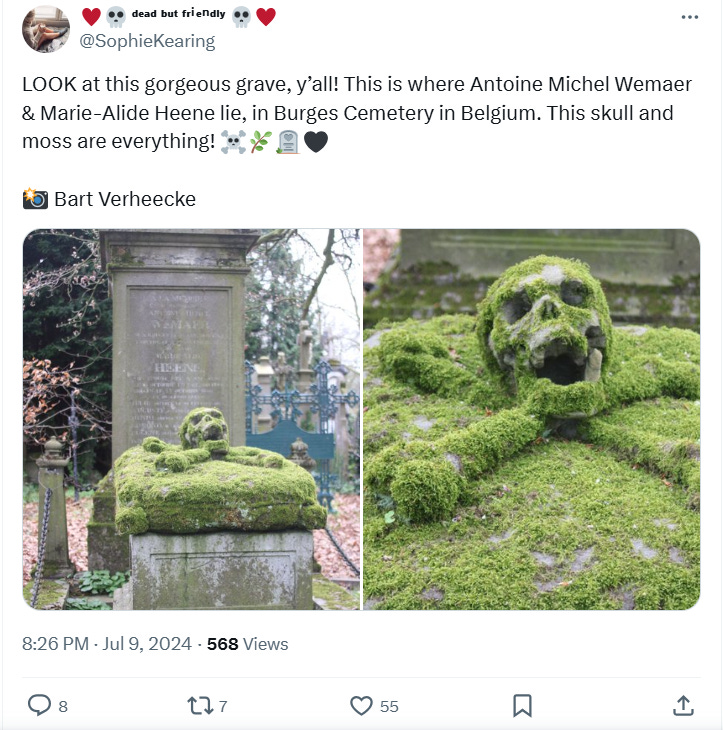
The mossy skull photo tweet: https://x.com/SophieKearing/status/1810742213074096174
6. What do you generally read? Why do you gravitate towards those stories?
I read what I write — which is fantasy x science fiction x horror. I love Tolkien, Clarke, Herbert, Martin, Salvatore, King, Barker, many more. I love great big fiction, worldbuilding and magic and ancient histories. Clive Barker deals with “the fantastique,” which is a French term for when the supernatural realms seamlessly bleed into our mundane reality. This is the tradition that I aim to enter with my stories. The social dynamics and futurecrafted geopolitics of science fiction are other major draws, as well as the starship tech and alien life. These are the authors and stories that have inspired me to create my own worlds and characters. The visions they have gifted the world are the very same things that I try to create on my pages. All that being said, I certainly read beyond fiction too and I highly value the art of the essay. The philosophical & sociological publication Aeon features some of my favorite writing.
7. In your opinion, what separates a good short story from a great short story?
The best short story I have ever read was “The Jaunt” by Stephen King. This story, alongside “The Lottery” by Shirley Jackson, gave me an understanding of what true power an imaginative short story can have. These are stories that are unsettling, provocative, and leave the reader feeling brain-warped in the best sort of way. The best short stories do not necessarily have to feature such a violent *twist*, but those are the ones I’ll never forget.
8. What is a short story you believe everyone should read? (If it is available online for free, please link it!)
“The Last Question” by Isaac Asimov
9. What other creative projects are you working on? How can readers find your other writing (and future writings)?
I am currently in the process of revising three novels that I am hoping to publish over the next year. JOURNEYERS is an epic fantasy about a trip through a magical forest by a human boy, a snake, a monkey, and a bird. WHEREVER HE MAY SWARM is a horror satire about a local man who gains power over insects and travels America. CYBER-SERIAL: POSTMODERN PROMETHEUS is a sci-fi cyberpunk tale of an orphan hacker and her AGI influencer plotting world domination via digital memetic warfare. You can find my writings & book updates at DylanOrosz.com. Follow me as @finalboyo on Twitter/X & BlueSky. Thanks for reading!